Birds of Prey & Conservation
Great Horned Owls
LUna's Story And the importance of our nocturnal neighbors
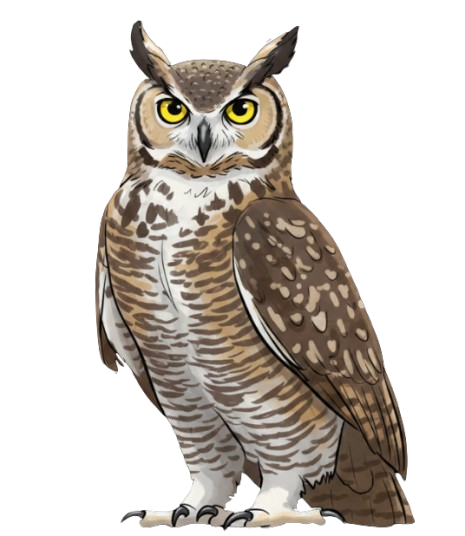

Luna's Life Story
Meet Luna, our beautiful Great-Horned Owl who has called the Six Flags Safari her home since 2019.
Luna was acquired from the Academy of Natural Sciences in 2019; however she was rescued by a local Pennsylvania animal rescue in 2015 after she was struck by a car causing her irreparable damage leading to her current non-releasable status.
Luna unfortunately suffered some life-changing damage through her accident losing partial vision in one eye with a detached retina and a partial loss of her right wing. Since here arrival at Six Flags, she has been welcomed and cared for closely by many Educators and Veterinarians who provide her with a comfortable place to live, high-quality diet, and lots of fun enrichment to keep her active and happy!
Luna now lives at the Six Flags Wild Safari as an animal ambassador teaching both kids and adults alike the importance of our mighty nocturnal neighbors and what we as people can do to protect her kind from the injuries she sustained.


Our Native Neighbors
Great Horned Owls thrive all across the Americas from the tip of Chile to the diverse ecosystems of our native forests and wetlands right here in New Jersey.
Great-Horned Owls are unique in that they are distinguished from other owls due to their large-size ranging from 18.1 to 24.8 inches and length and weighing up to 5.50 lbs.
Great-Horned Owls also possess extremely sharp night vision providing them the ability to effectively hunt and strike at any prey in complete darkness. Fun Fact: Researchers believe that Great-Horned Owls possess poor color vision but despite this the owl is able to see more effectively at night!
A Great-Horned Owls' method of attack comes from two things, their one of kind ability to fly completely silent and the pure strength that comes from their talons. Due to the arrangement of their feather groupings, Great-Horned owls unlike any other bird are able to fly completely silent allowing them to sneak up on their prey in complete darkness. Along with this their talons use about 28 lbs. of force just to open and close with around 200 to 500 lbs. of force. Another fun fact is that Great-Horned Owls can also pickup something 1.5 times their own size!


A Journey Of Survival
Despite the Great-Horned Owls power, these birds are in danger from not only the destruction of their habitat but their consistent run-ins with our vehicles.
With the never-ending development of neighborhoods these owls' homes are becoming smaller and smaller, and owls are facing significant challenges when hunting for food. Great-Horned Owls are generally solitary however with their shrinking territory they are being forced to travel further for food or even into dangerous places such as the sides of roads where rodents may hang around due to the food scraps and roadkill left by people passing by in their vehicles.
Luna's case is one of thousands of bird strike cases that happen every year. As Luna stands here resting and relaxing, she is a symbol of conservation for not only Great-Horned Owls but for all birds who suffer the same fate. Her life and story don't only help people learn about owls but learn how we as people can actively protect and help these nocturnal friends who may even live in your backyard.

Respect The Habitat
Drive With Care
Donate To Local Wildlife Refuges
01
Conservation Action
Protecting Our Raptors
Stop The Scraps
02
Throwing old food scraps and other food material out your window can be a serious hazard for Great-Horned Owls and other birds as it may not only attract rodents but other birds of prey who could get caught in traffic trying to score a quick bite. Rodents are a primary food source for Great-Horned Owls so once the rodents are there so will the owls.
Great-Horned Owls tend to be active at dusk or late in the night, flying low at road level so driving with care and slowing down in very dark areas can help prevent collisions by giving you the chance to slow down before it's too late. Make sure to use high-beam lights while driving in dark areas and refrain from honking as it could startle any nearby animals including Great-Horned Owls.
03
Preserving old-growth forests and wetlands is vital for nesting. Supporting local wildlife conservation groups and volunteering for wildlife cleanup events can make the a difference for not only Great-Horned owls but for the local wildlife population giving them a healthy and trash free enviornment to roam.
04
Even when volunteering isn't an option donating to local wildlife refuges could make the difference of a lifetime for animals recovering from accidents, they had out in the wild. Without rescue organizations Luna wouldn't be here, wildlife rehabilitation isn't simply caring for animals but preserving the local population balance and giving animals a second chance at life even if they aren't releasable.
Support A Local Rescue
Helping animals doesn't always need to be physical in-person work! Supporting local rescues near you helps fund the care of injured animals and birds just like Luna! Your donation could give sick and injured animals another chance at life rebuilding our local ecosystems one patient at a time.